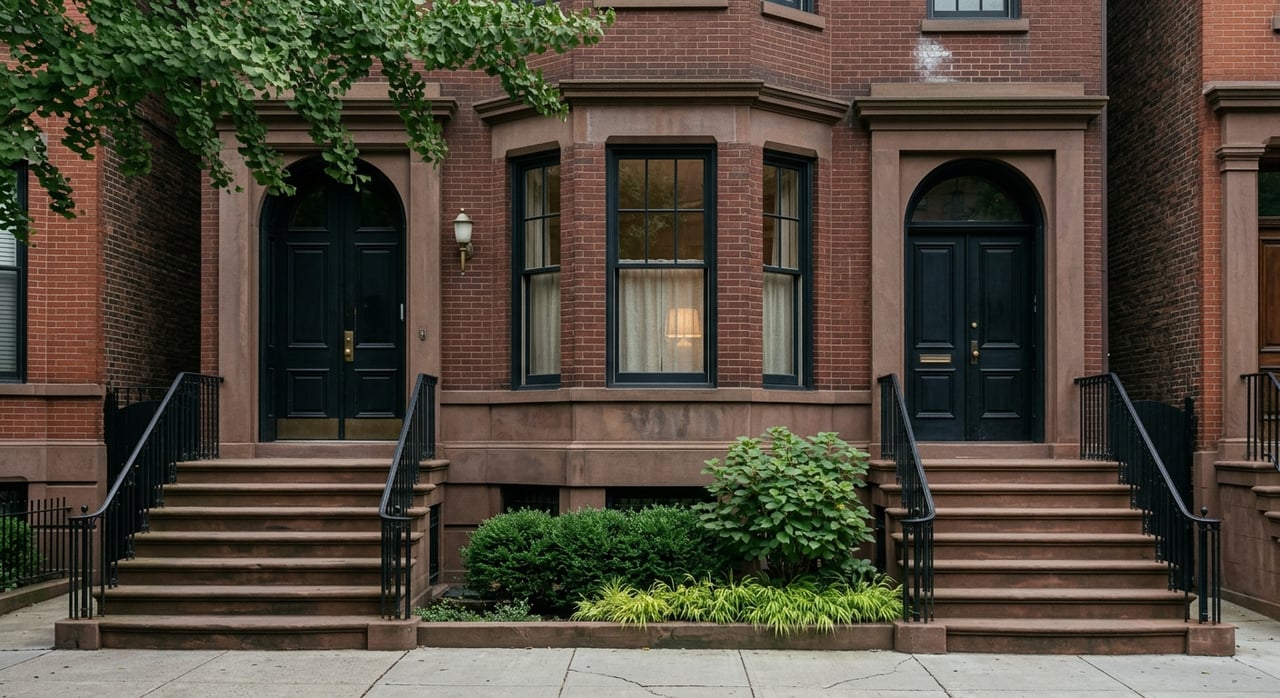
Trying to choose between the Upper West Side and Park Slope for brownstone living? It is a fair question, because both neighborhoods offer historic homes, strong park access, and classic New York character. But if you want the most traditional, block-after-block brownstone experience, the differences become clearer fast. Here is how Park Slope and the Upper West Side compare, so you can decide which setting fits the way you want to live.
Brownstone Living Looks Different
Park Slope feels more townhouse-first
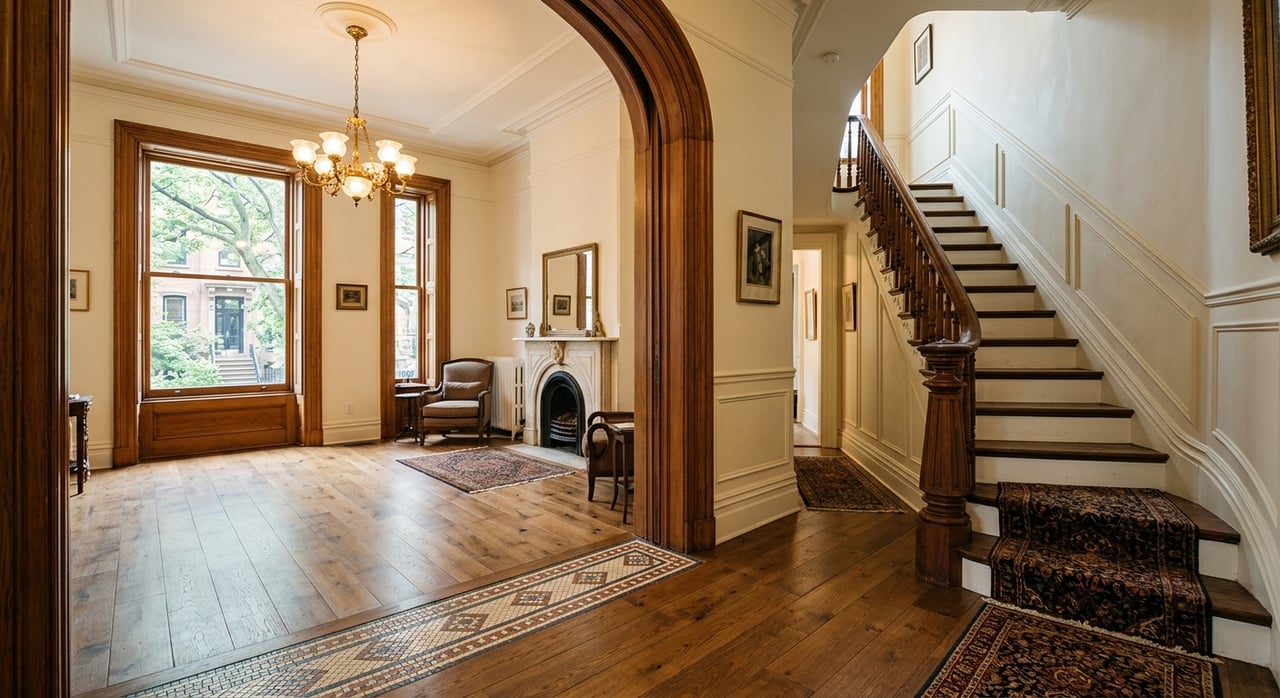
Park Slope is the more townhouse-dominant market of the two. The Park Slope Historic District map and related Landmarks Preservation Commission materials describe a neighborhood defined by single-family row houses and flats buildings, with many structures dating from the mid-19th century through the early 20th century.
That matters because it shapes your everyday experience. In Park Slope, brownstone living is not just available. It is part of the neighborhood’s core identity, with a wide range of architectural styles that include Italianate, neo-Grec, Queen Anne, Romanesque Revival, Beaux-Arts, and more.
Upper West Side feels more mixed
The Upper West Side/Central Park West Historic District includes rowhouses, but it also includes tenements, flats, apartment buildings, apartment hotels, studio buildings, hotels, and institutional buildings. In other words, brownstones are part of the Upper West Side story, but they sit within a much broader residential mix.
If you love Manhattan and want a brownstone within a denser, more vertical setting, that can be a real plus. But if your goal is a more continuous townhouse environment, Park Slope usually reads as the stronger fit.
Streetscape And Feel
Park Slope offers more visual continuity
According to the Landmarks Preservation Commission’s announcement of the 2016 extension, Park Slope is known for tree-lined streets, a predominant residential character, and a high level of architectural integrity. That helps explain why so many buyers think of Park Slope when they picture classic Brooklyn brownstone living.
There is a sense of rhythm from block to block. Stoops, facades, and rows of historic homes create a cohesive setting that feels distinctly townhouse-centered.
Upper West Side offers more variety
On the Upper West Side, the historic landscape is more layered. Because the district contains both townhouses and a significant amount of apartment-house development, the streetscape can feel less uniform depending on the block.
That is not a drawback for every buyer. Some people prefer the mix of townhouse pockets, larger prewar buildings, and easier access to a wider range of Manhattan amenities. It simply creates a different version of brownstone living.
Market Signals And Pricing
Park Slope appears tighter
Recent neighborhood-level data suggests Park Slope is both pricier and faster-moving overall. Zillow’s Park Slope home value data shows an average home value of $1,570,152, with homes going pending in about 44 days.
That snapshot suggests buyers are moving with purpose. It also supports the idea that Park Slope is seeing stronger broad-neighborhood demand right now.
Upper West Side may feel more negotiable
For the Upper West Side, Zillow reports an average home value of $1,365,423 and homes going pending in about 84 days. The research report also notes that Realtor.com characterized the Upper West Side as a buyer’s market in January 2026, while Park Slope homes sold for approximately asking on average in the same period.
These figures are best treated as directional. They reflect whole-neighborhood housing stock, not just brownstones, and the Upper West Side’s larger apartment inventory can influence the averages. Even so, the takeaway is useful: Park Slope looks tighter, while the Upper West Side appears to offer more room for negotiation at the neighborhood level.
Daily Life Tradeoffs
Transit favors different routines
Transit is one of the clearest lifestyle differences. In Park Slope, you have access to the F and G trains at 7 Av, 15 St-Prospect Park, and 4 Av-9 St, along with the 2 train at Grand Army Plaza, as shown on the MTA subway maps.
The Upper West Side has denser north-south service, including the 1 train along Broadway and the B and C along Central Park West. For many Midtown commuters, that can mean more route redundancy. For buyers who prioritize downtown Brooklyn or lower Manhattan access, Park Slope remains very competitive.
Parks shape the neighborhood experience
Park Slope is closely tied to Prospect Park, a 526-acre park designed by Frederick Law Olmsted and Calvert Vaux, with Grand Army Plaza serving as a formal main entrance. That relationship gives the neighborhood a strong park-centered identity.
The Upper West Side offers a different outdoor setup. It is framed by both Central Park and Riverside Park, creating a dual-park lifestyle that blends interior green space with waterfront access. If you want one neighborhood anchored by one major park, Park Slope stands out. If you want two distinct park experiences, the Upper West Side has a compelling edge.
School context is not the same
For buyers comparing public school district context, Park Slope and the Upper West Side fall into different DOE frameworks. Research examples for Park Slope include P.S. 295 and M.S. 51 in Geographic District 15, while Upper West Side examples include P.S. 199 and M.S. 250 in Manhattan Geographic District 3.
That does not make one option universally better than the other. It simply means your search may involve different district conversations depending on where you land.
Historic Rules Matter
Landmark review can affect exterior work
If you are buying a brownstone, ownership is about more than layout and location. It can also involve long-term planning for maintenance, restoration, and upgrades.
The NYC Landmarks Preservation Commission notes that designated structures are protected under the Landmarks Law and may be subject to review procedures for exterior work. Just as important, designation does not freeze a building or an area, but it does mean changes may require review if the property is within a historic district.
Park Slope has especially broad protection
Park Slope has a particularly large concentration of protected buildings. After the 2016 Extension II, the neighborhood had 2,853 protected buildings across the original district and extension areas, according to the LPC announcement.
That level of protection helps explain why Park Slope often feels so visually consistent. For buyers who value preservation and a strong historic streetscape, that can be a meaningful advantage.
Which Neighborhood Fits You Best?
Choose Park Slope if you want classic brownstone living
Park Slope is likely the better fit if you want:
- A more continuous townhouse streetscape
- A neighborhood where brownstones define the residential identity
- Strong proximity to Prospect Park
- A market that appears tighter and faster-moving overall
If your vision of brownstone living centers on classic Brooklyn rowhouse blocks, Park Slope checks those boxes more clearly.
Choose the Upper West Side if you want Manhattan access
The Upper West Side may be the better match if you want:
- Manhattan convenience and transit redundancy
- Brownstone living within a broader prewar residential setting
- Access to both Central Park and Riverside Park
- A neighborhood that may offer more flexibility in a mixed housing market
For many buyers, the choice is not about which neighborhood is objectively better. It is about whether you want a townhouse-first experience in Brooklyn or a townhouse pocket within a layered Manhattan neighborhood.
If you are weighing that decision and want grounded, neighborhood-specific guidance, The Schier Cloonan Team offers a refined, concierge approach backed by deep Manhattan market knowledge and trusted local perspective.
FAQs
Is Park Slope or the Upper West Side better for true brownstone living?
- Park Slope is generally the stronger fit for a classic brownstone lifestyle because it is more townhouse-dominant and has a more cohesive residential streetscape.
Is Park Slope more expensive than the Upper West Side overall?
- Based on the research report’s Zillow snapshot, Park Slope had a higher average home value than the Upper West Side, though those figures reflect whole neighborhoods rather than brownstones only.
Does the Upper West Side still offer brownstone homes?
- Yes. The Upper West Side historic district includes rowhouses, but they are part of a broader housing mix that also includes many apartment buildings and other property types.
What park access do you get in Park Slope versus the Upper West Side?
- Park Slope is anchored by Prospect Park, while the Upper West Side is bracketed by both Central Park and Riverside Park.
Do landmark rules affect brownstone renovations in Park Slope and the Upper West Side?
- Yes. In either neighborhood, exterior work on a property within a historic district may be subject to Landmarks Preservation Commission review.