Curious what makes Williamsburg’s waterfront such a draw? For many buyers, it is the rare New York setting where riverfront parks, skyline views, modern buildings, and multiple commute options all come together in one place. If you are considering a move, an investment, or simply want to understand the area better, this guide will walk you through how the waterfront looks, feels, and functions day to day. Let’s dive in.
Williamsburg Waterfront at a Glance
Williamsburg’s waterfront is not just a row of residential buildings along the East River. It is a post-industrial corridor that has been reshaped over time by rezoning, public access requirements, and large mixed-use development.
That history still shows up in the landscape. Former industrial uses, including warehousing and the long life of the Domino Sugar Refinery, continue to influence the area’s look and identity even as new residential and commercial spaces have arrived.
Today, the waterfront feels polished and contemporary, but it does not read as generic. Preserved refinery-era structures and artifacts, especially around Domino Park, give the area a visual connection to Brooklyn’s industrial past.
How the Waterfront Feels Day to Day
One of the first things you notice is that the shoreline works more like a series of destinations than one uninterrupted strip. In practical terms, places like Domino Park, the Domino redevelopment, Marsha P. Johnson State Park, and Bushwick Inlet Park shape the experience.
That makes the waterfront feel park-facing and view-driven first, residential second. Even when you are near newer towers, the public realm plays a major role in how the neighborhood feels.
This is not accidental. Waterfront projects in the area are shaped by requirements for public access and visual corridors, which helps explain why the shoreline often feels open, walkable, and connected to the river rather than closed off by private development.
Parks Define the Lifestyle
Domino Park
Domino Park is the signature waterfront space in Williamsburg. This six-acre East River park includes a waterfront promenade, elevated walkway, playground, volleyball courts, bocce, a dog run, and seasonal programming in Domino Square.
The skyline views are a major part of the appeal. So is the way the park preserves industrial artifacts from the former refinery site, giving the space a sense of history rather than wiping it clean.
For many residents and visitors, this is where the waterfront lifestyle becomes most tangible. You can walk the promenade, spend time outdoors, and enjoy one of the area’s best public vantage points over the East River and Manhattan.
Marsha P. Johnson State Park
Marsha P. Johnson State Park adds another distinct waterfront experience. The seven-acre park at 90 Kent Avenue is free to enter, open daily, and includes a playground, dog run, picnic areas, and barbecue access.
It also preserves elements of the site’s history, including cobblestone streets and railroad tracks embedded in concrete. That gives the park a grounded, textured feel that stands apart from newer landscaped spaces.
If you are looking for a more relaxed waterfront setting, this park offers passive recreation with the same broad skyline backdrop that makes the area so memorable.
Bushwick Inlet Park
At the north end of the broader Greenpoint-Williamsburg waterfront, Bushwick Inlet Park serves as another major public anchor. NYC Parks describes it as the centerpiece of the waterfront and notes features like a multipurpose field, viewing platform, playground, green-roofed building, and public waterfront access.
For buyers thinking beyond a single building, that matters. A neighborhood with several meaningful public spaces tends to offer a more layered lifestyle than one built around only private amenities.
Views and Outdoor Access Matter Here
A key part of waterfront living in Williamsburg is that some of the best views are public, not private. Domino Park and Marsha P. Johnson State Park both offer wide-open East River and Manhattan skyline views that anyone can enjoy.
That changes the feel of the neighborhood. Even if you do not live in a unit with direct water views, the waterfront still gives you easy access to scenic outdoor space as part of your everyday routine.
The broader outdoor experience is also supported by the Brooklyn Waterfront Greenway. NYC DOT describes it as a 14-mile foot and bike path designed to connect neighborhoods from Greenpoint to Sunset Park, with interim sections already in place along Williamsburg streets.
Commuting from the Waterfront
For many buyers, the waterfront’s biggest strength is flexibility. You are not relying on only one mode of transportation.
Ferry Access
NYC Ferry’s East River route serves both North Williamsburg and South Williamsburg. The landings are at North 6th Street and Kent Avenue, and at 440 Kent Avenue, with direct service to Wall Street/Pier 11 and East 34th Street.
For some commuters, that can be a meaningful lifestyle advantage. If your destination lines up with the route, the ferry can offer a scenic and practical alternative to the subway.
Subway Connections
The subway backbone remains the L train. Stations in and around Williamsburg include Bedford Avenue, Lorimer Street, Graham Avenue, Grand Street, Montrose Avenue, and Morgan Avenue, with Lorimer Street connecting to the G.
The J line also serves Marcy Avenue, where riders can connect to the M and Z at select times. In real life, this means your exact building location can shape whether the ferry, subway, or a combination of both feels most convenient.
Walking and Biking
The Williamsburg Bridge is also central to the neighborhood’s commuting identity. It includes both a walkway and a bikeway, and NYC DOT reports average daily use of 8,645 cyclists and 4,440 pedestrians as of 2024.
That level of activity says a lot about how people move here. If you value active transportation, the bridge is not just a landmark. It is part of daily life for many residents.
What Homes Feel Like on the Waterfront
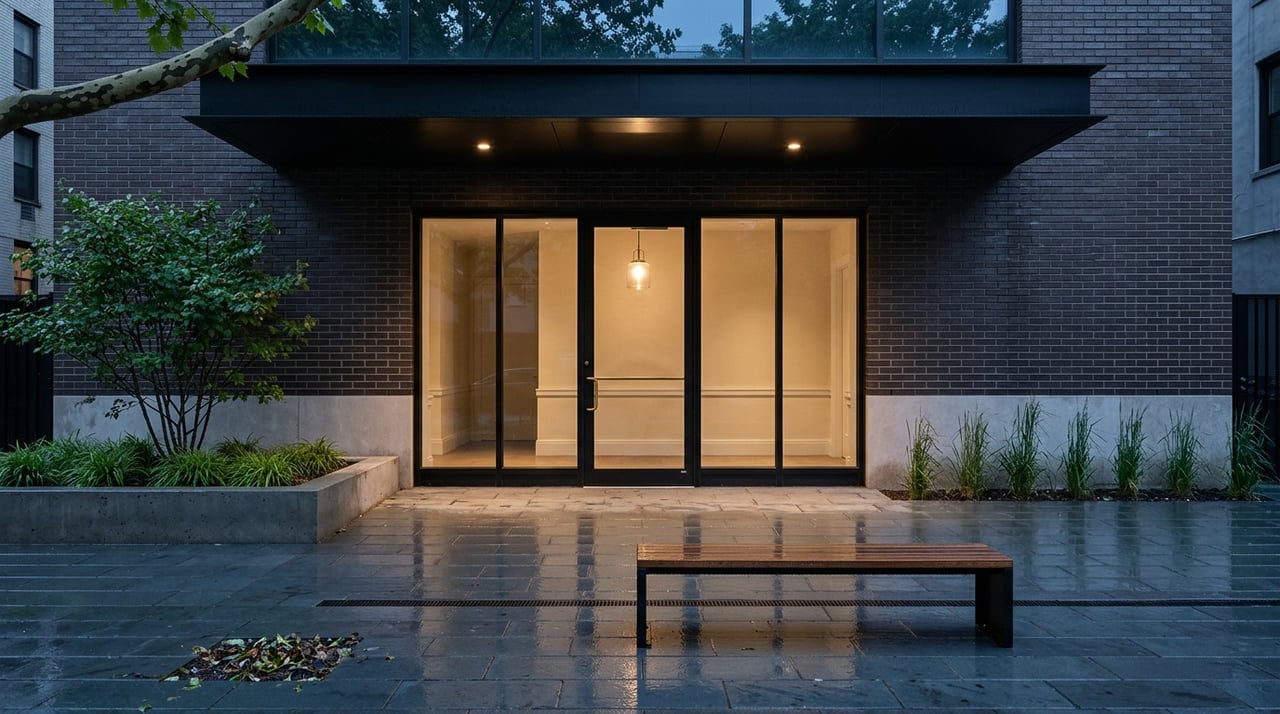
The newest waterfront housing stock is concentrated in mixed-use condominium and rental towers. These projects sit on land that once held industrial uses, and current development patterns blend residential space with retail, commercial uses, and public open space.
That creates a different housing experience from Williamsburg’s inland blocks. Along the waterfront, buildings tend to feel more design-forward, more amenity-rich, and more directly connected to parks and river views.
The visual language is also distinct. Think contemporary glassy towers, thoughtful landscape design, and preserved industrial details that nod to the refinery era.
What Buyers Often Expect in Waterfront Buildings
Amenity expectations are typically high in this corridor. Representative new-build offerings in the area highlight features such as outdoor spaces, work-from-home lounges, aquatics facilities, integrated retail, and recreation-focused design.
A fair takeaway is that waterfront buildings often skew toward concierge-style, amenity-heavy living. That said, the exact package can vary significantly by building, so it is worth comparing details carefully.
If you are beginning your search, focus on the features that will shape your everyday routine most:
- Proximity to a ferry landing
- Park access
- Building outdoor space
- Work-from-home areas
- View orientation
- Street-level retail and services
- Commuting distance to subway lines
Dining, Retail, and Everyday Energy
Williamsburg’s waterfront is increasingly mixed-use at street level. City planning records for current waterfront development describe commercial and local retail space alongside housing and public open space, reinforcing the area’s live-work-play identity.
Domino Square offers a good example of how that shows up in daily life. It is positioned as a public square with seasonal ice skating and food tenants, helping the waterfront function as a destination district rather than only a residential enclave.
That matters if you want convenience and activity close to home. The area is not defined only by where you live, but also by what you can walk to and experience nearby.
What to Consider Before You Buy
Waterfront living can be compelling, but the right fit often comes down to details. In Williamsburg, even a few blocks can change your access to the ferry, your subway routine, your park proximity, and your building experience.
As you compare options, it helps to ask practical questions such as:
- How close is the building to the North Williamsburg or South Williamsburg ferry landing?
- Will you use the ferry, the L train, or both most often?
- Are you prioritizing private views, or is nearby public waterfront access enough?
- Do you want a full amenity package, or simply a strong location near the parks?
- How important is year-round activity in the immediate area?
These questions can help you narrow your search quickly. They also keep the focus on how the neighborhood will support your actual routine, not just how it looks in photos.
Why Williamsburg’s Waterfront Stands Out
What makes Williamsburg’s waterfront distinctive is the combination of access, design, and public space. You have a riverfront setting shaped by parks and promenades, not just private buildings, plus ferry service, subway access, and a strong walking and biking culture.
You also have a setting that feels tied to New York’s industrial history while still delivering a very current residential experience. That mix gives the area depth, and it is a major reason buyers continue to find it compelling.
If you are weighing whether waterfront living aligns with your goals, a clear, building-by-building strategy matters. The right guidance can help you balance views, amenities, commuting ease, and long-term value with much more confidence.
If you are exploring Williamsburg or considering your next move in New York City, The Schier Cloonan Team offers refined, concierge-level guidance backed by deep market experience.
FAQs
What is Williamsburg waterfront living like in daily life?
- Williamsburg waterfront living centers on public parks, skyline views, modern mixed-use buildings, and flexible commuting options including ferry, subway, walking, and biking.
Which parks define the Williamsburg waterfront lifestyle?
- Domino Park, Marsha P. Johnson State Park, and Bushwick Inlet Park are the main public spaces shaping the waterfront experience.
How do you commute from Williamsburg’s waterfront?
- Many residents use a mix of NYC Ferry landings in North and South Williamsburg, the L train, nearby G and J connections, and the Williamsburg Bridge walkway and bikeway.
What types of homes are common on Williamsburg’s waterfront?
- The waterfront is known for newer mixed-use condo and rental towers that often include modern amenities, outdoor spaces, and access to parks and views.
Are Williamsburg waterfront views only available from private buildings?
- No. Some of the area’s most notable East River and Manhattan skyline views are available from public spaces like Domino Park and Marsha P. Johnson State Park.
Does Williamsburg’s waterfront stay active outside summer?
- Yes. Parks remain open year-round, and spaces like Domino Square add seasonal programming that helps keep the waterfront active beyond the warmer months.