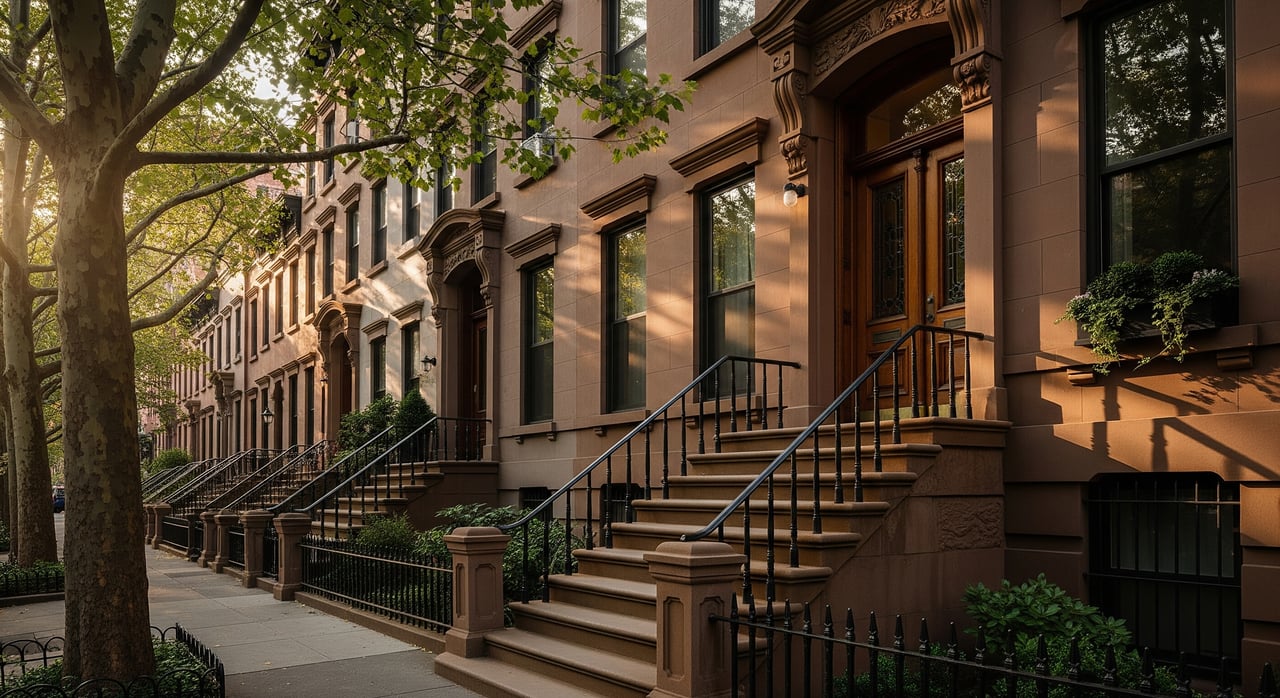
You can stroll a single Park Slope block and see a century of design on display. If you have ever wondered why one stoop feels airy and elegant while the next reads bold and monumental, you are not alone. Understanding brownstone styles helps you spot quality, plan smart renovations, and speak the language buyers respond to. In this guide, you will learn how to identify the three most common Park Slope facade styles, what layouts you can expect inside, and how preservation and approvals affect value. Let’s dive in.
Park Slope brownstones at a glance
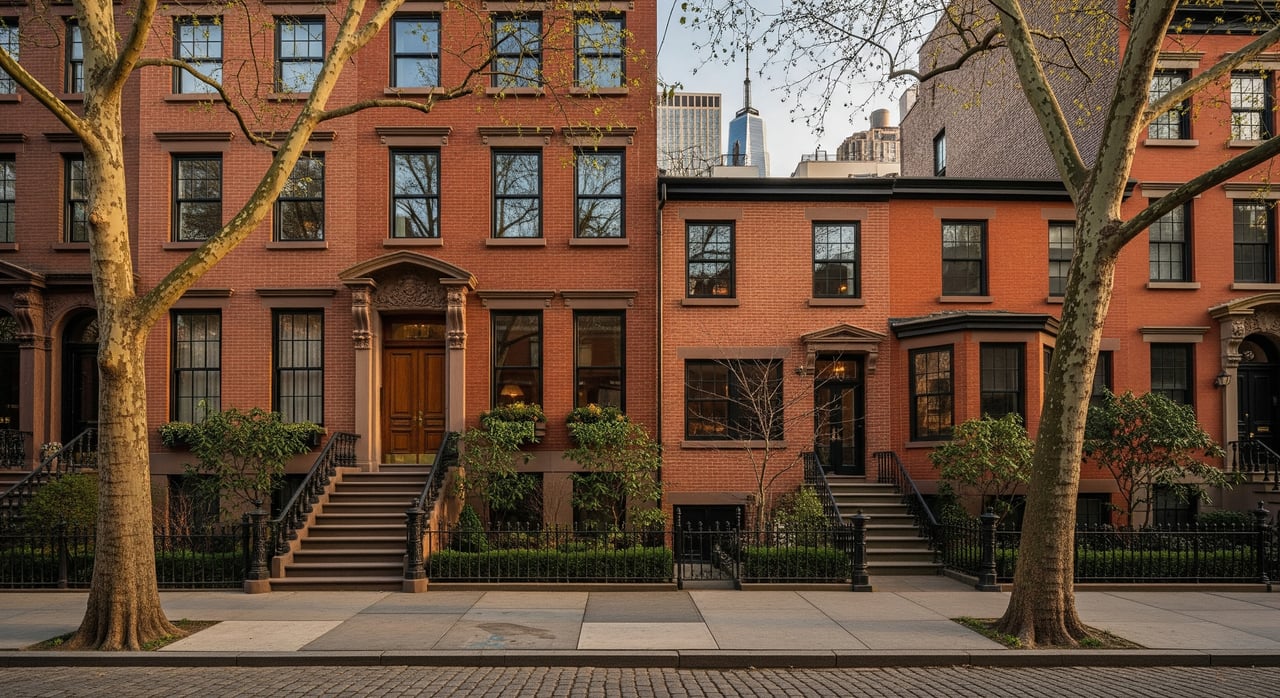
Park Slope grew quickly in the late 19th and early 20th centuries as transit improved and Prospect Park took shape. Builders delivered long rows of townhouses on narrow lots, often 18 to 25 feet wide and 3½ to 5 stories tall, with small rear yards. Many homes use true brownstone for the facade, while others are brick with brownstone trim or painted brick. In real estate, people use “brownstone” and “rowhouse” loosely, so learning the cues below helps you get specific.
Much of Park Slope sits within New York City historic districts. If you plan exterior work — stoops, masonry, cornices, windows, or openings — expect Landmarks Preservation Commission review in addition to Department of Buildings permits. Early planning with professionals who know Landmarks and DOB saves time and protects value.
How to spot each style
Brownstone styles often overlap, and some homes blend details from multiple eras. Use these cues as a quick field guide.
Italianate cues
Italianate rowhouses appeared broadly in the mid 19th century and remained popular into the 1870s.
- Flat or low‑pitched roof with a pronounced cornice supported by decorative brackets.
- Tall, narrow windows, sometimes round or segmental arched on the parlor level.
- Carved brownstone lintels and sills; a strong horizontal cornice line.
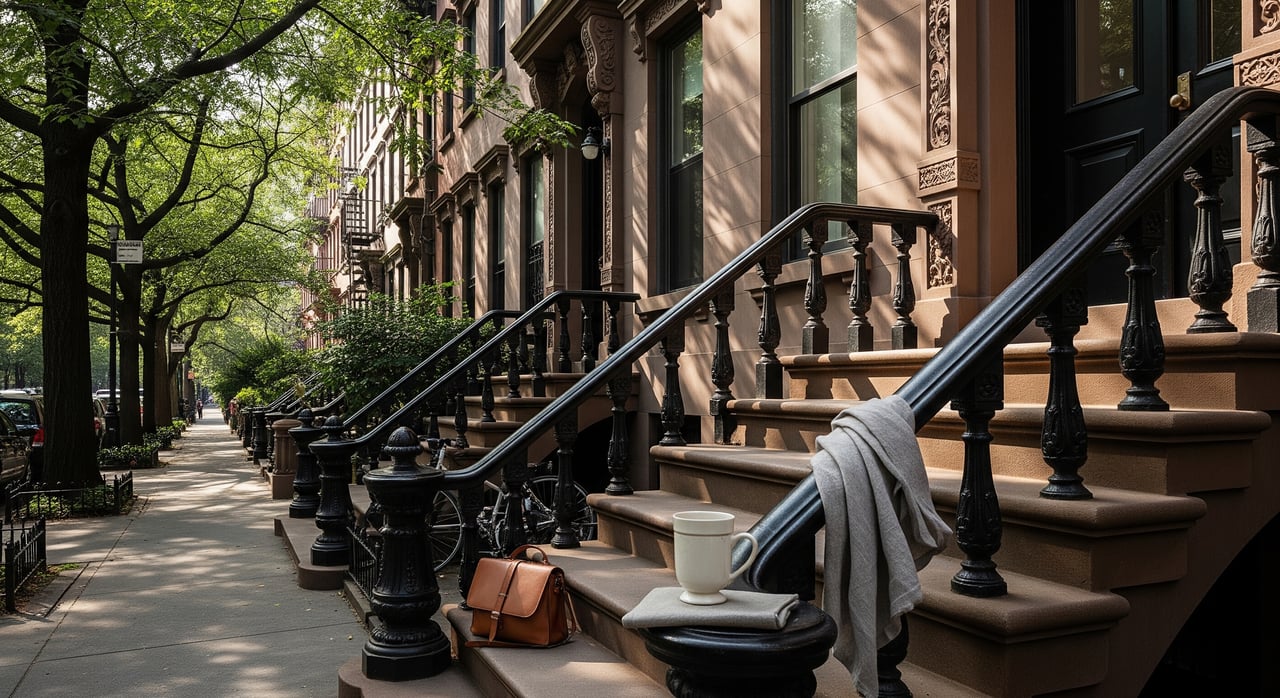
- A classic stoop leading to a raised parlor entry, often framed by an ornate surround.
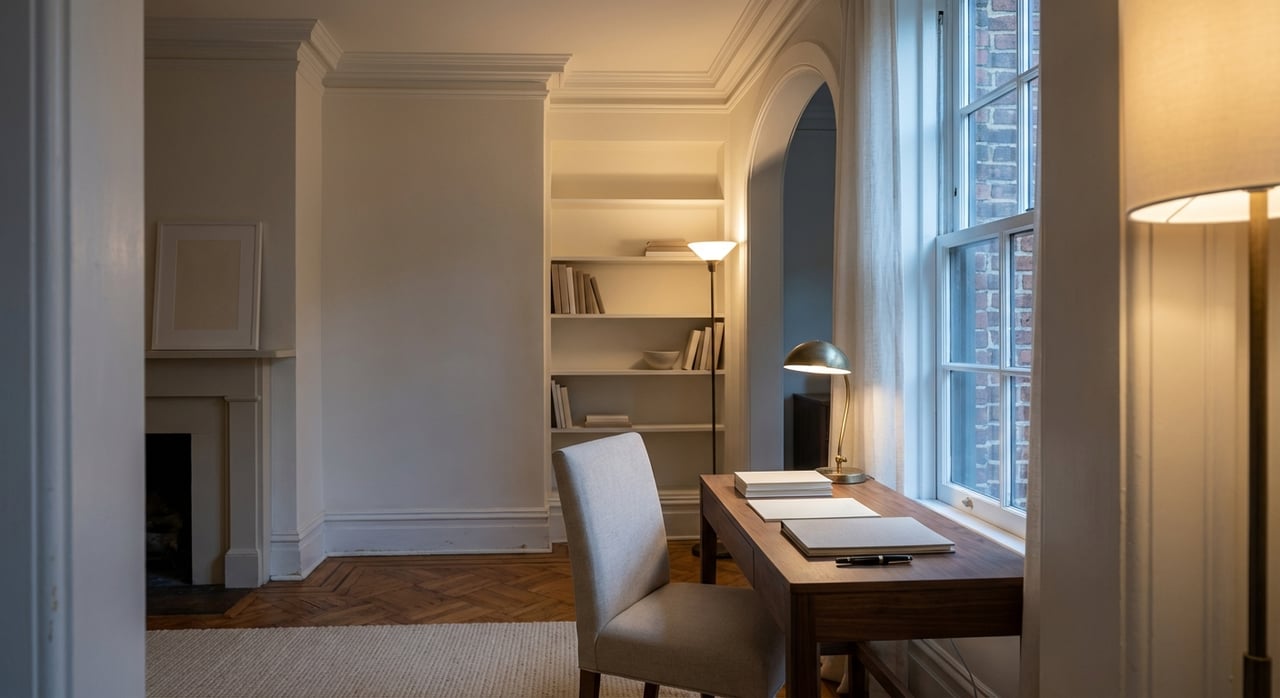
Inside, you often find high parlor ceilings, heavy plaster cornices and medallions, and ornate stair newels with pocket doors between the front and back parlors.
Neo‑Grec cues
Neo‑Grec followed Italianate and ran roughly from the late 1860s into the 1880s.
- Geometric, incised ornament in lintels and surrounds rather than heavy classical carving.
- Rusticated brownstone with strong horizontal banding or belt courses.
- Angular window frames with stylized rosettes or hash‑mark incisions.
- Cornices are a bit more restrained; boxy projecting bays are common.
Interiors mirror Italianate layouts but with simpler millwork and incised moldings. The overall feel is crisp and linear.
Romanesque Revival cues
Urban Romanesque Revival peaked from the 1880s into the early 1900s.
- Heavy massing with large semicircular arches at doors and windows.
- Rock‑face or rusticated stone, sometimes used across the entire facade.
- Deeply set openings, recessed porches, and polychrome mixes of stone and brick.
- A robust, grounded look rather than a vertical, delicate profile.
Parlor ceilings can still soar, and stone or stucco elements may appear inside vestibules. Plans sometimes shift to fit the style’s bolder forms.
Typical layouts and flow
Most Park Slope brownstones follow a familiar stacking that shapes livability and renovation choices.
- Garden/Basement: Historically service spaces, today often a separate apartment or a modern kitchen and casual living area. Expect dampness to be a focus of any upgrade.
- Parlor Floor: The showcase level, accessed from the stoop. A front parlor connects to a rear parlor or dining room through pocket doors or an open arch.
- Second Floor: Traditionally bedrooms and now often a large suite or library plus bedrooms.
- Upper Floors: Additional bedrooms, offices, or flexible spaces. Ceiling heights usually decrease as you go up.
Rear ells or extensions create extra kitchen or dining space and form light wells that influence how you plan mechanical runs and room openings.
Original details to preserve
Certain features consistently resonate with Park Slope buyers and add long‑term value.
- Exterior: Carved lintels and sills, bracketed cornices, stoop newels, and original ironwork. Rusticated stone courses and door surrounds define style and curb appeal.
- Interior: Plaster cornices, medallions, and ornamental staircases. Pocket doors, original moldings, and marble mantels show craftsmanship you cannot easily replicate.
- Windows: Tall wood double‑hung sash with true divided lites or arched heads are common. When repair is possible, it typically beats replacement, especially in landmarked contexts.
A preservation‑first mindset does not mean freezing a home in time. It means prioritizing repairs in kind, using compatible materials, and keeping high‑value historic areas intact while modernizing where it counts.
Common issues to check
Older brownstones reward careful due diligence. Look for these typical conditions and plan accordingly.
- Brownstone weathering: Soft stone can spall or scale when exposed to moisture and salts. Good repairs match profiles and use compatible mortars; overly hard mixes can worsen damage.
- Water infiltration: Failing cornices, blocked gutters, poor flashing, and backyard drainage often lead to leaks and rot. Garden levels need waterproofing and proper grading.
- Structural movement: Settlement, cracked lintels, or corbel issues at stoops and cornices appear in aged buildings and may require targeted engineering.
- Systems and code: Tight floor‑to‑floor heights complicate HVAC ducting. Egress, fire separation, and sprinklers come into play for conversions. Window replacements must suit both the style and, on landmarked facades, Landmarks guidelines.
Renovation roadmap in Park Slope
Start with due diligence
- Confirm whether the property lies within a historic district and learn the Landmarks process for approvals.
- Review Department of Buildings records for prior alterations, Certificate of Occupancy status, and legal unit count.
- Bring in a preservation architect or contractor with brownstone experience for a condition survey and phased plan.
Smart modernization
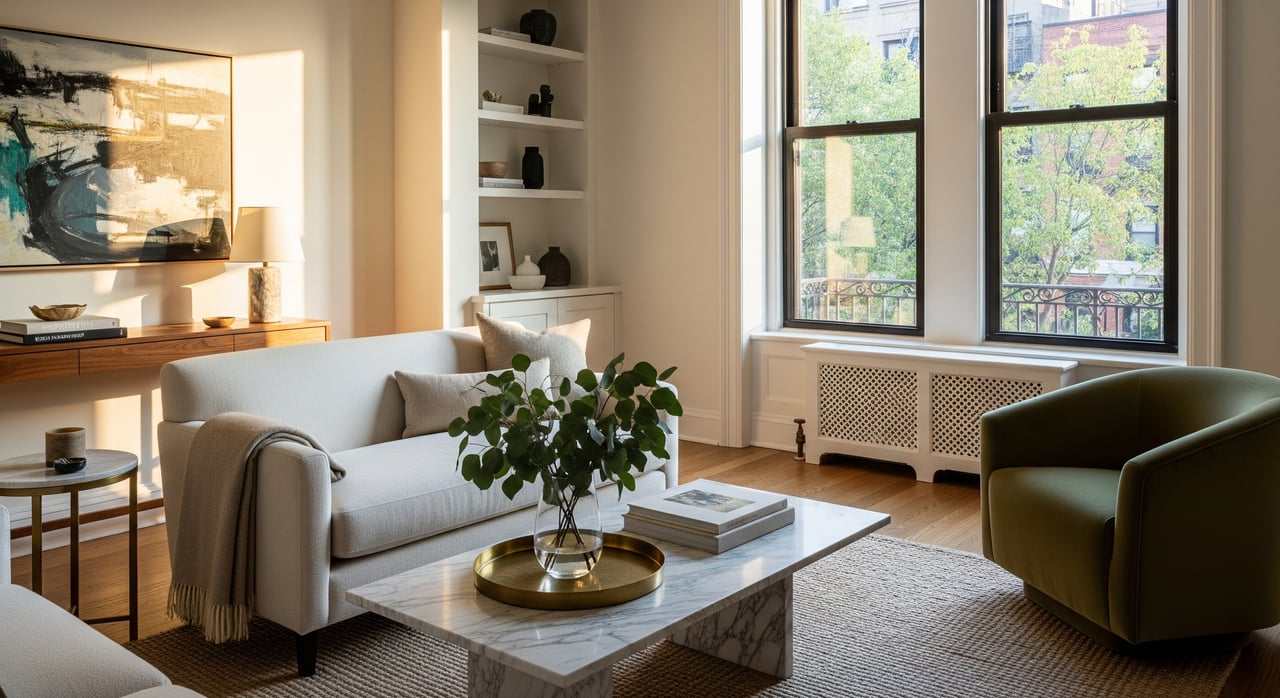
- Focus modern upgrades on kitchens and baths, which drive daily comfort and buyer demand.
- Keep parlor‑level features — moldings, fireplaces, and the main stair — as intact as possible.
- Place larger interventions in secondary spaces, such as a rear extension or garden level, to preserve the home’s character.
Exterior changes and approvals
- Expect Landmarks review for facade work, stoops, and windows in historic districts. Plan timelines with this in mind.
- Restore original stoop geometry, tilework, and ironwork where feasible. These elements anchor curb appeal and photos.
- When windows cannot be repaired, choose historically appropriate profiles and muntin patterns that match originals.
Systems and logistics
Consider ductless mini‑splits or micro‑ducts if ceiling depths limit traditional HVAC. Plan routes to avoid damaging historic fabric.
Evaluate elevator or lift options early if single‑family reconversion is the goal; these affect structure and layout.
Coordinate insulation, electrical, and plumbing upgrades to meet code without stripping detail.
What style means for resale
The market rewards homes that blend period character with modern utility. Your choices during ownership and renovation influence future value.
What helps value
- Restored or carefully replicated exterior details and windows.
- Updated kitchens and baths paired with preserved trim and mantels nearby.
- Legal, well‑documented reconversions with upgraded systems.
- A clean file of Landmarks approvals and DOB permits that builds buyer and lender confidence.
What can hurt value
- Gut renovations that remove all historic features, leaving little of the brownstone’s identity.
- Exterior changes that do not align with the style or lack required approvals in landmarked areas.
- Mismatched materials and quick fixes, such as hard parges on soft stone, that fail visibly.
- Unpermitted work or illegal unit counts that complicate closings and financing.
Listing language that works
Buyers respond to accurate style vocabulary. Phrases like “Neo‑Grec rusticated facade with incised lintels,” “Italianate parlor with plaster cornices and pocket doors,” or “Romanesque archway entry with rock‑face base” are specific, memorable, and credible. Pair that language with a clear renovation narrative: what you preserved, what you modernized, and why.
Quick field checklist
Use this simple list when you walk a block or tour a home.
- Cornice and roofline: Big bracketed cornice (Italianate), restrained metal cornice with crisp geometry (Neo‑Grec), or heavier massing with arches (Romanesque Revival)?
- Window openings: Tall narrow and possibly arched (Italianate), angular surrounds with incised ornament (Neo‑Grec), or broad semicircular arches (Romanesque Revival)?
- Masonry texture: Smooth brownstone slabs (Italianate), rustication with banding (Neo‑Grec), or rock‑face stone and polychrome mixes (Romanesque Revival)?
- Stoop and entry: Ornate surrounds and carved details (Italianate), geometric frames and boxy bays (Neo‑Grec), or deep, arched entries (Romanesque Revival)?
- Interior clues: Plaster medallions, pocket doors, ornate newel posts, and marble mantels. Note ceiling heights on each level.
- Red flags: Spalling stone, blocked gutters, cracked lintels, damp garden level, and noncompliant window replacements in landmarked areas.
Ready to buy or sell?
Whether you are assessing a block for your next purchase or preparing your own stoop for the market, understanding Park Slope styles gives you an edge. You can prioritize the right repairs, plan updates where they add the most value, and present your home with language that attracts qualified buyers. If you want a clear plan — from valuation and curated staging to a smart renovation narrative and compliant documentation — our team is here to help.
Connect with the boutique, concierge service of The Schier Cloonan Team for guidance tailored to your goals.
FAQs
How do I tell Park Slope styles apart?
- Look at the cornice, window shapes, and masonry texture: bracketed cornices and tall arched windows suggest Italianate; incised angular surrounds and belt courses suggest Neo‑Grec; heavy arches and rock‑face stone point to Romanesque Revival.
What brownstone details should I preserve?
- Prioritize stoops and ironwork, carved lintels and sills, cornices, plaster moldings, pocket doors, original staircases, and wood windows where repair is feasible.
What exterior work needs Landmarks approval in Park Slope?
- In historic districts, changes to facades, stoops, windows, openings, and significant masonry elements typically require Landmarks Preservation Commission review along with DOB permits.
Can I convert a brownstone to or from multiple units?
- Yes, but you must comply with Department of Buildings rules for egress, fire separation, means of escape, and Certificates of Occupancy; plan for code‑compliant systems and documentation.
How should I evaluate stone and facade condition before listing?
- Inspect for spalling or scaling stone, cracked lintels, failing cornices, and water management issues such as blocked gutters and poor rear drainage; bring in a preservation‑experienced mason or architect.
Are modern windows acceptable in landmarked brownstones?
- Repairs to original wood windows are often preferred; if replacement is needed, historically appropriate wood profiles and matching muntin patterns are typically recommended in landmarked contexts.
Which pros should be on my brownstone team?
- A preservation architect, a mason experienced with brownstone, a structural engineer familiar with townhouses, and a DOB expeditor or attorney for complex approvals form a strong core team.